
For used and vintage gear shops
BacklineSync keeps your listings in step across Reverb, eBay and Sweetwater Gear Exchange, with the right price on each — and when a guitar sells anywhere, it comes down everywhere else, so nobody buys it twice.
No card needed. Built and used every day by Aeonic Frets.
Works with
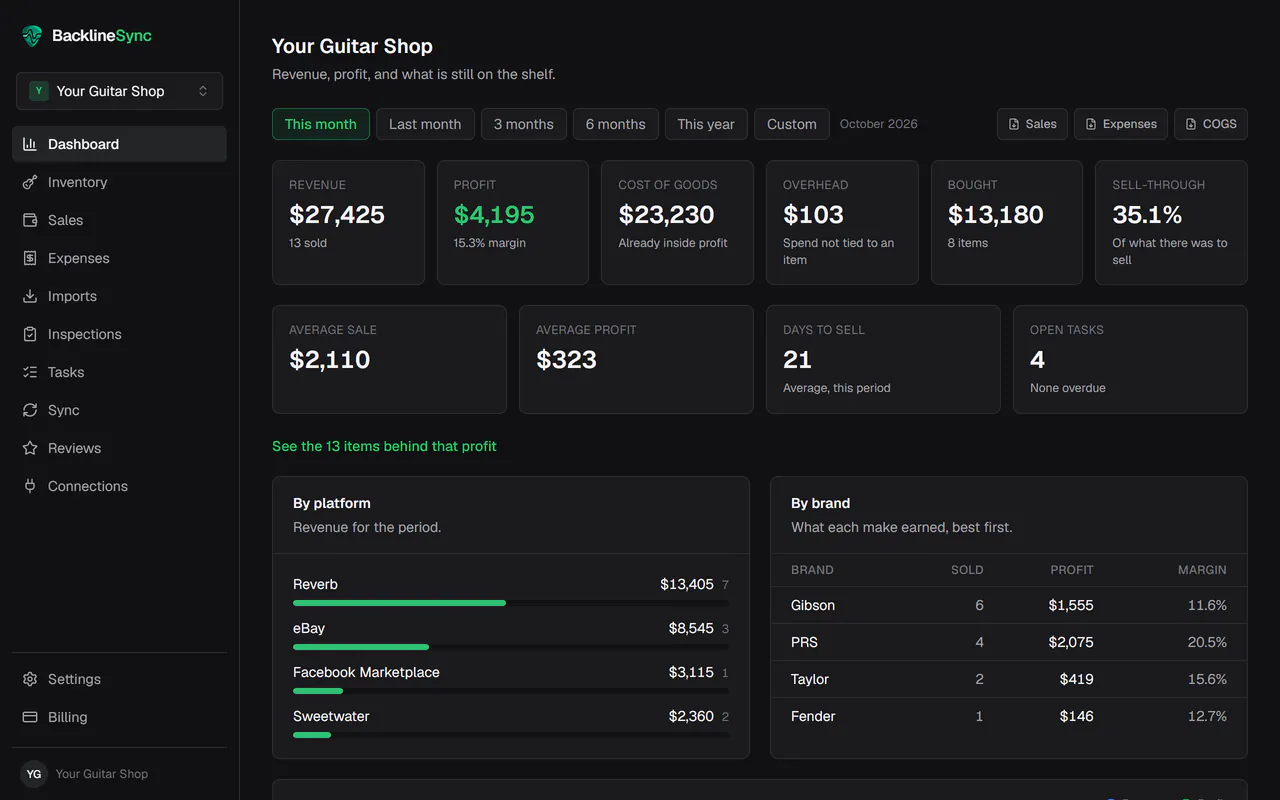
A demo shop with sample data.
How sync works
The whole idea, in four steps.
You list a guitar once.
On Reverb, the way you already do.
It goes up everywhere else.
BacklineSync copies it to eBay and Sweetwater, photos and all, at the price you set for each.
It sells on one.
Here, on eBay.
It comes down everywhere else.
BacklineSync ends it on Reverb and takes it off Sweetwater, so nobody buys it twice.
Getting started
After that, it keeps everything in step by itself.
Paste a key from Reverb, connect eBay in one click, and add Sweetwater Gear Exchange. Shopify is coming soon.
Before anything changes, a plain list of every listing it would put up, change or take down — worth a proper read, because the next step makes it real.
It checks every fifteen minutes and acts on a sale as soon as a marketplace reports it. Pause it whenever you like.
What it does
When a guitar sells, BacklineSync takes it down on every other marketplace — within seconds when the marketplace says so, and within the hour when it has to ask. No second buyer for the same guitar.
Mark eBay up to cover its fees, take five percent off somewhere else, round to the nearest five dollars. One rule per marketplace — and matching means the same price, to the cent.
eBay's categories and the details it insists on, worked out for amps, guitars and pedals. A guitar's grade is never listed as better than it is.
What you paid, what it sold for, and every fee, repair and shipping label in between — with your sales imported from Reverb, Shopify and eBay and your purchases from Reverb, instead of typed in.
Work through your inspection checklist and BacklineSync draws a clean condition sheet, ready to go on the listing beside the photos.
Relist a Reverb listing that has gone quiet as a new one, keeping its SKU and its other listings — and see how many watchers it costs before you do.
A closer look
Screens from the app itself, running a demo shop with sample data.
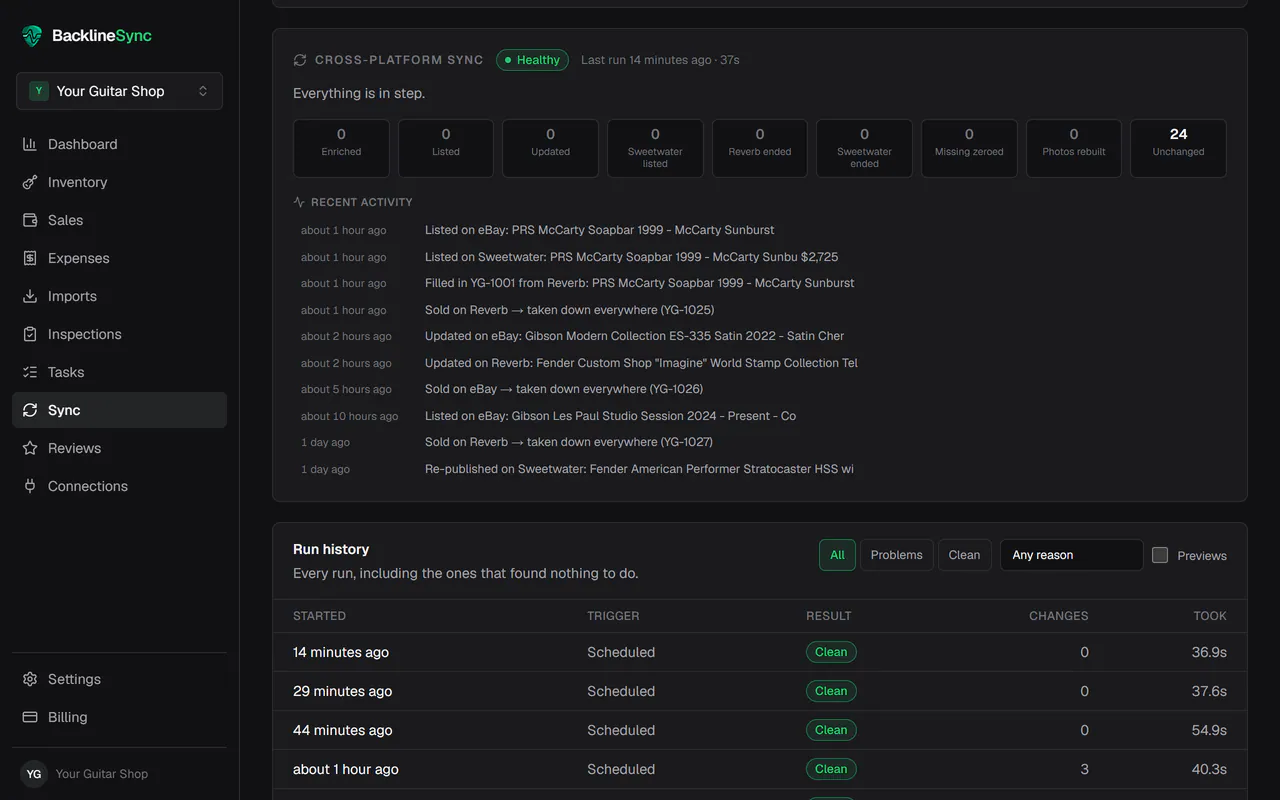
Sync
A run every fifteen minutes, and every guitar listed, updated or taken down, written down as it happened — so you can watch the sync work rather than take it on trust.
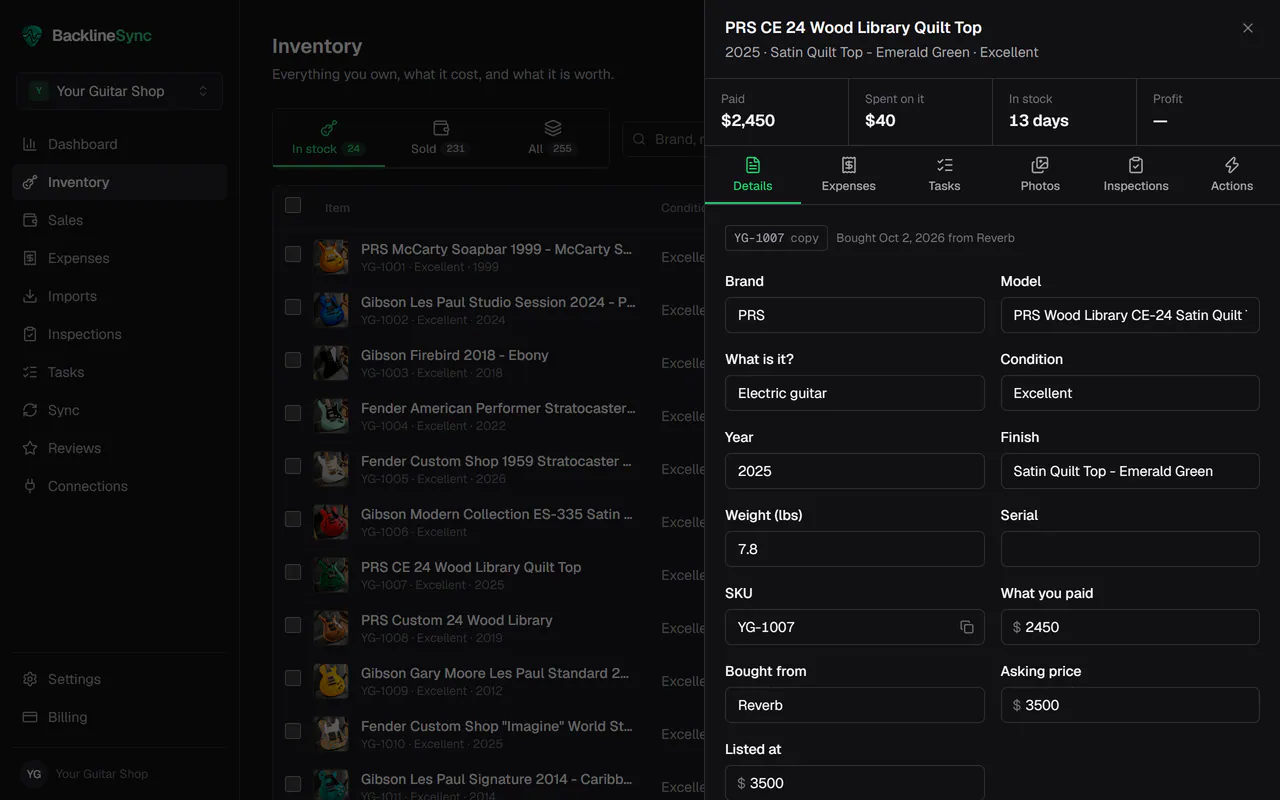
Inventory
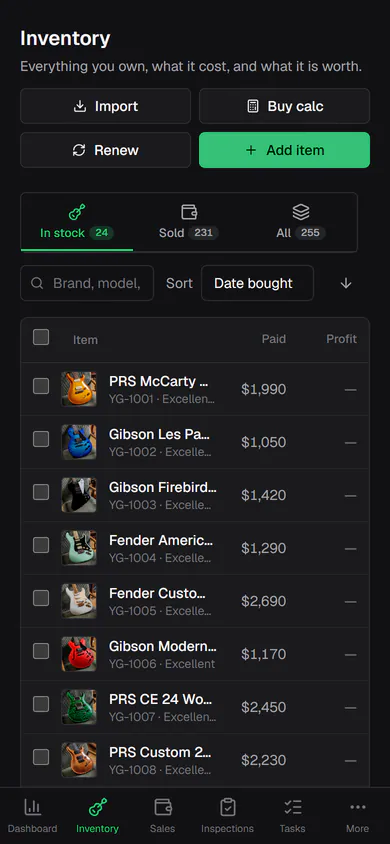
What you paid, what you have spent on it and what it is listed for — and once it sells, the profit, with every fee counted.
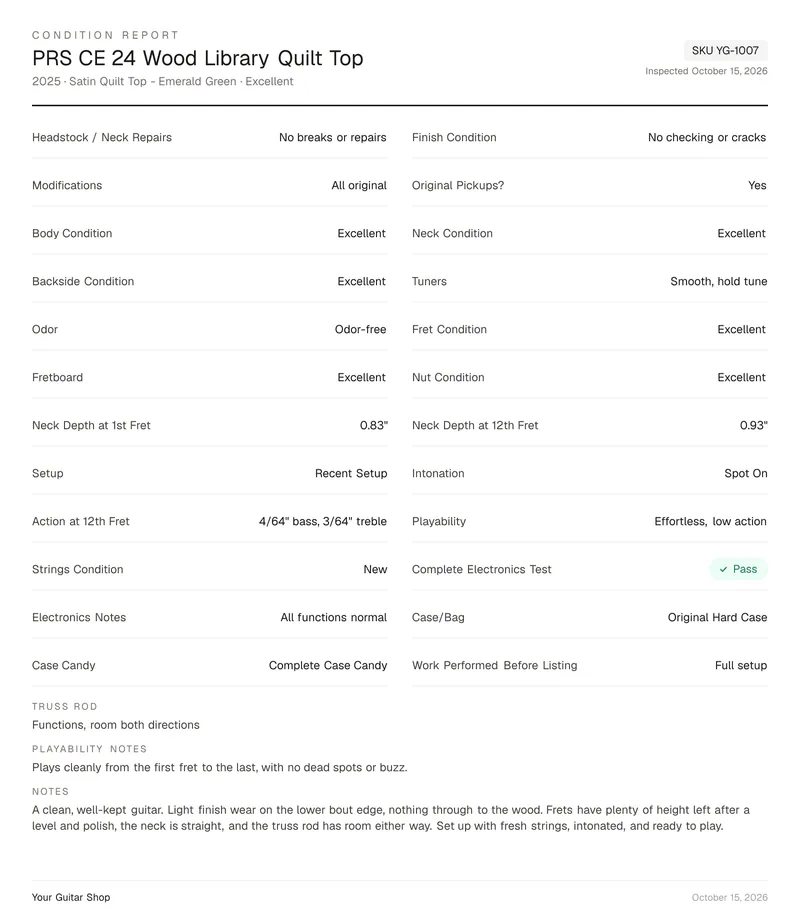
Inspections
Work through the checklist and BacklineSync draws the sheet: every answer a buyer cares about, on one image that goes up with the photos.
On your phone
Add it to your home screen and it opens like an app — inventory, sales and inspections, wherever the guitar is.
Your way
Most shops list on Reverb, where a listing joins its model page and most of the views are. Keep doing that, and BacklineSync copies each listing everywhere else. Or enter a guitar once in BacklineSync and it goes up everywhere, Reverb included.
Built in a working shop
“I built BacklineSync to run my own guitar shop, and it still does, every day. There’s nothing in it I don’t use.”
7 days of Pro, with every marketplace you connect kept in step. No card until you decide to stay.